



In the first half of 2026, cybersecurity events continued to be dominated by topics such as AI, automated defense, and Zero Trust. From RSAC in the United States and Cybersec Asia in Thailand to Japan IT Week and CYBERSEC in Taiwan, AI was naturally the most prominent theme on the show floor, with enterprises looking to new technologies to ease the burden on their security teams. Yet many conversations at these events quickly returned to a more difficult but practical premise: if a device has not been discovered or identified, the signals available for AI analysis will remain incomplete, and Zero Trust policies will have no clearly defined asset to which they can be applied. The first questions enterprises truly need to answer are: Do they really know which devices are connected to their internal networks, and is every device currently secure, compliant, and under management?
1. Different Trends Across Global Events, but the Real Concern Is Internal Network Blind Spots
Technology can accelerate decision-making, but devices that remain undiscovered still cannot be managed effectively.
This challenge manifests differently across markets. The U.S. market is focused on AI and identity security, while customers in Taiwan often emphasize compliance, audits, and supply chain management. Japan IT Week approaches the issue from the perspective of day-to-day enterprise operations, reminding the market that the stability of existing environments and the associated management overhead must still be considered when new technologies are introduced. In Thailand and neighboring Southeast Asian markets, the continued expansion of manufacturing, logistics, and multinational operations is accelerating device growth, making internal network visibility an especially tangible management challenge.
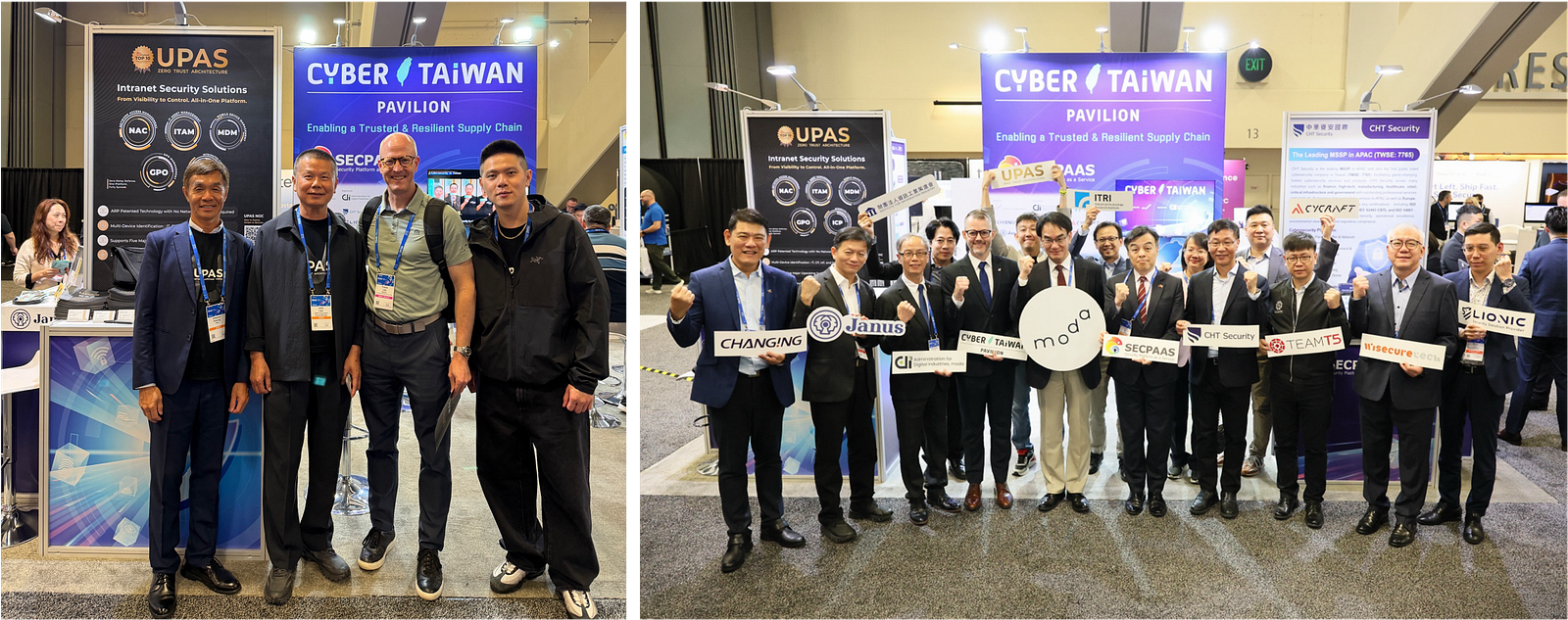
At RSAC, UPAS engaged with the global cybersecurity industry and explored developments in Zero Trust, Identity Security, automated defense, and AI Security.
This also illustrates that internal network visibility involves more than compiling a device inventory. When an enterprise does not know who owns a device, where it connected from, or which system it is running, subsequent access management, vulnerability remediation, network segmentation, and incident investigation must all rely on incomplete information. If the device inventory cannot be trusted, even the most advanced analytics and automation may simply process the visible portion of the data more quickly.
Implementing Zero Trust likewise requires attention to the devices themselves. In addition to verifying who is signing in, enterprises must understand which device is connecting and whether it complies with policy. Corporate networks are no longer limited to employee computers and servers. They also include printers, cameras, access control systems, conferencing equipment, guest devices, contractors' laptops, production equipment, and various legacy systems. Some of these devices are unsuitable for agent installation, while others fall outside conventional account management. Yet all of them may become connected nodes on the network. Attackers do not necessarily need to breach the most heavily protected system head-on. Finding a persistent node that remains unpatched or has no clearly established ownership may be enough to enable further lateral movement through the internal network.
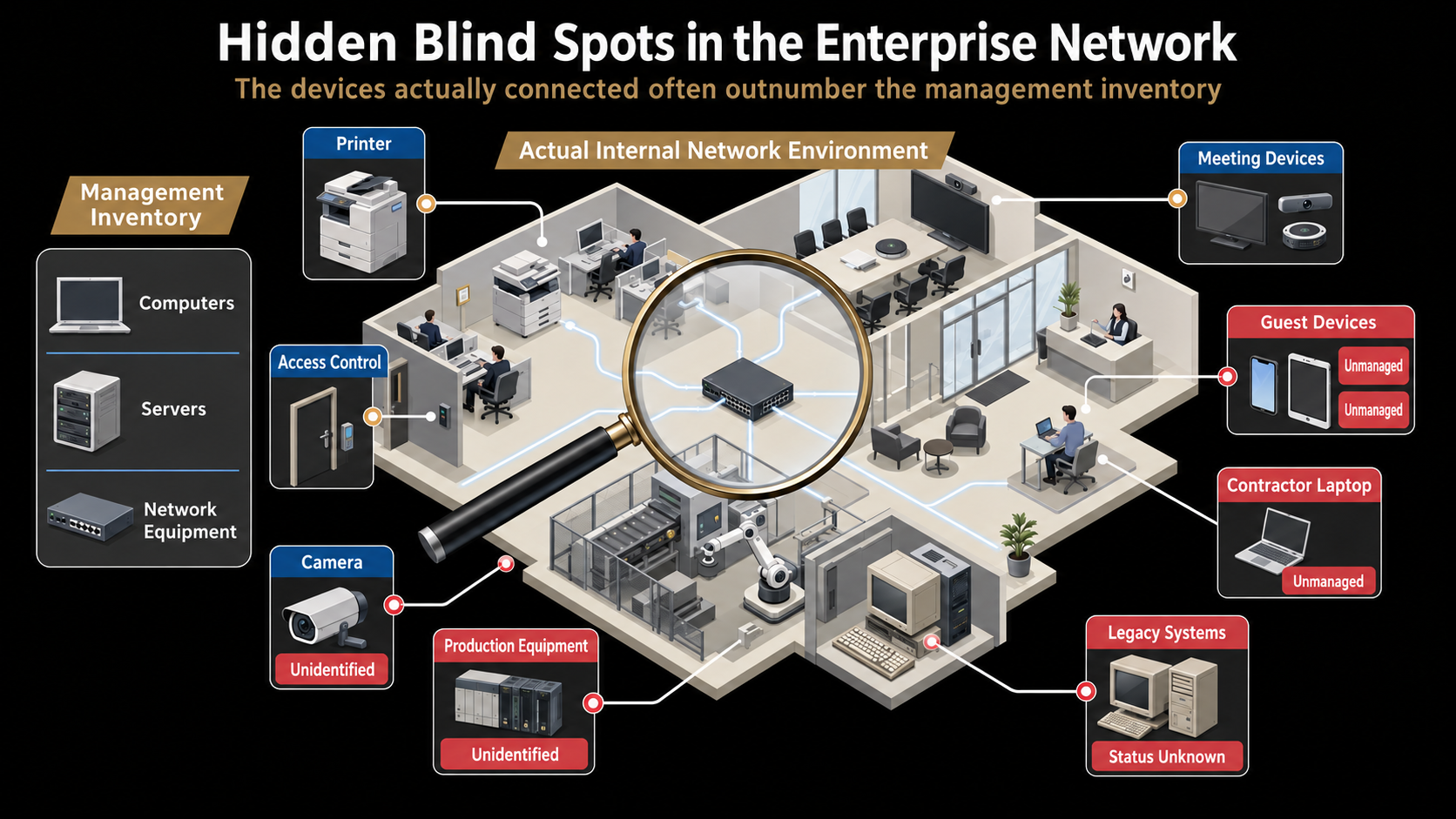
Although the four major events each emphasized different trends, they ultimately pointed to a similar management foundation. The underlying need was remarkably consistent:
Enterprises must first establish a trusted view of their devices before access control, remediation, auditing, and incident investigation can operate from a shared management foundation.
Complete device information can provide a common reference point for EDR, SIEM, identity management, and vulnerability management, helping security teams reduce the burden of reconciling inventories, handling exceptions, and establishing accountability while mitigating tool sprawl and management fatigue.

2. A Lesson from the Thai Market: As Sites and Devices Multiply, Manual Management Is No Longer Enough
During discussions at Cybersec Asia in Thailand, enterprises were concerned with more than any single cybersecurity product. Their central question was how to maintain control across a rapidly changing environment. Many organizations are simultaneously bringing new facilities online, extending the service life of legacy equipment, admitting contractors, and connecting supply chain partners. Device ownership and management responsibilities are often spread across multiple departments.
The situation is even more complex in manufacturing and critical infrastructure. Production-line controllers, industrial computers, cameras, access control systems, printers, and sensors may not be suitable for agent installation, and some devices cannot be taken offline or updated at will. If even a portion of these assets remains unidentified, an enterprise will struggle to determine which devices are connected, whether they comply with policy, or whether they have become unauthorized points of entry.
The lesson from the Thai market, however, applies well beyond Southeast Asia. As enterprises expand across sites, departments, or national borders, discrepancies quickly emerge in inventories maintained manually and across scattered spreadsheets. What administrators truly need is continuously updated device information, together with controls that enable immediate action when anomalies occur.
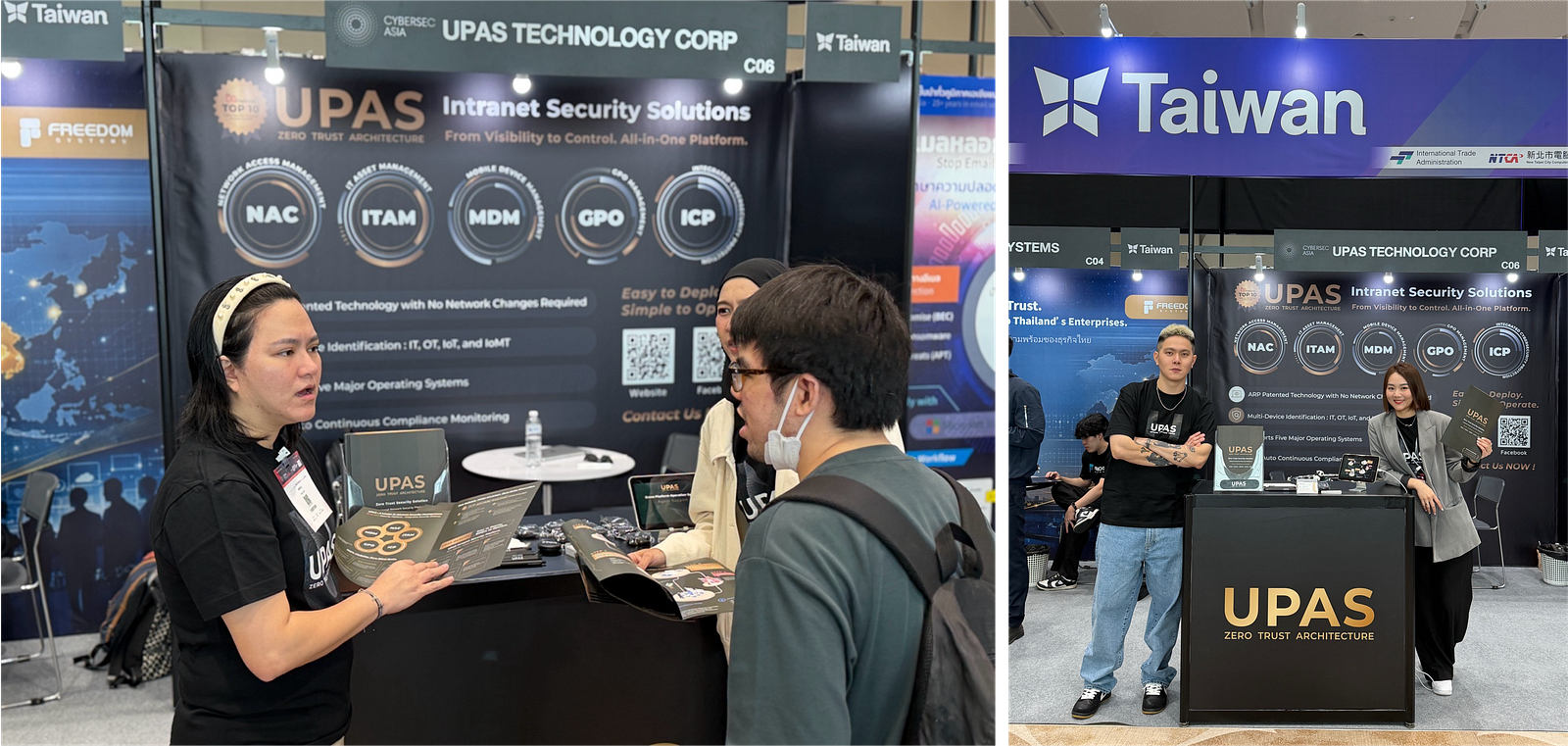
This is why terms such as “agentless,” “internal network visibility,” “device identification,” and “device blocking” often generated discussion at the UPAS booth more quickly than more eye-catching features. Many enterprises have already invested in cybersecurity tools and recognize the importance of AI, Zero Trust, and XDR. The real obstacle lies at the first step:
Existing network environments are too complex, device types are too diverse, and management responsibilities are fragmented across facilities, countries, and departments. If every device must have an agent installed before deployment can proceed, the project can easily stall when it encounters production equipment, legacy systems, guest devices, contractors' laptops, and non-Windows endpoints. Indiscriminately adding more software can also create another form of management fatigue. Security teams may appear to have more tools, while in practice they must maintain more rules, manage more exceptions, and contend with more gaps that cannot be explained.
3. UPAS NAC + ITAM: From Device Visibility to Continuous Management
This foundational layer is precisely where UPAS comes in.
UPAS integrates Network Access Control (NAC) and IT Asset Management (ITAM) on a single platform to address two of the most common management questions enterprises face: Which devices are currently connected, and what are their asset and security postures?
- The first step is visibility. Through agentless device discovery and identification, enterprises can identify the IP and MAC addresses, device types, and connection status of assets across the internal network. This includes printers, cameras, IoT, OT, and IoMT devices, guest devices, and legacy systems that are unsuitable for agent installation. This reduces the barriers to initial inventory collection and enables enterprises to establish an accurate device inventory more quickly.
- The second step is control. With clearer information about device identity and connection status, NAC can determine whether access should be permitted according to enterprise policies. It can also block, restrict access for, or issue alerts on unknown, unauthorized, or noncompliant devices. Administrators no longer need to rely solely on after-the-fact investigation and can respond more quickly when anomalous connections appear.
- The third step is continuous governance. ITAM further organizes information about computer hardware, software, patching, and compliance, extending device management from whether a device is connected to whether its current state meets organizational requirements. When NAC and ITAM share the same device view, network teams, security teams, and IT administrators can exchange information more easily while reducing duplicate inventory work and cross-departmental verification.
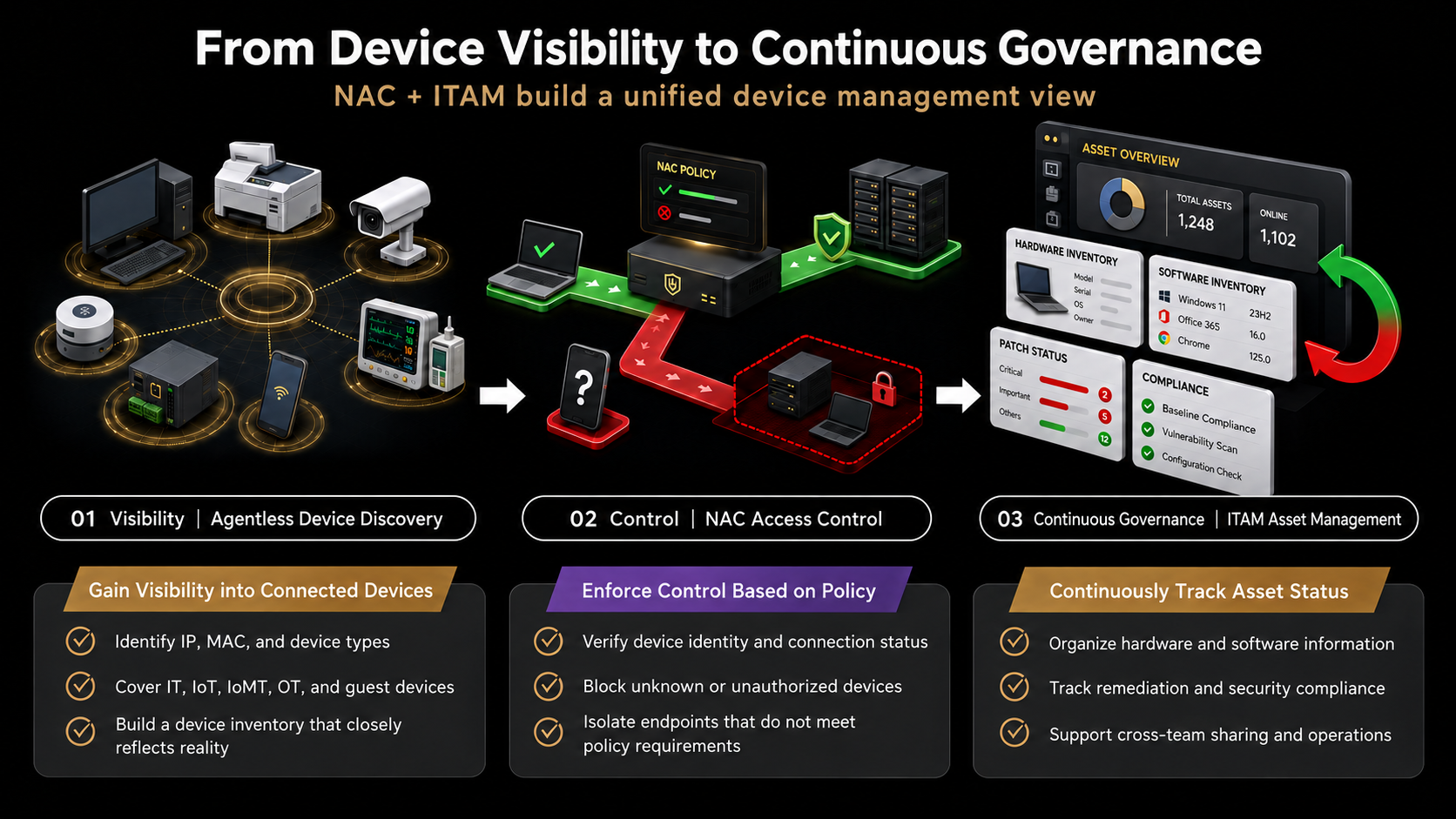
UPAS helps enterprises establish a complete management view from the moment a device connects.
With agentless NAC, the system can rapidly discover and identify different types of connected devices across the internal network, reveal unknown or unauthorized devices, identify device connection locations and network access status, and restrict or block access by noncompliant endpoints when anomalies are detected. When further integrated with ITAM, the scope of management can be extended to computer hardware and software assets, patch status, security compliance, and day-to-day operations. Device discovery, access control, rogue device detection, asset inventory, patch management, and policy-based alerts or blocking can then form a more continuous governance and automated security response workflow. Enterprises no longer need to reconcile information repeatedly across multiple systems. They can gain a clearer view of the entire internal network and apply controls and follow-up actions using consistent device data.
4. Translating Global Market Needs into Products That Reflect Real-World Internal Network Environments
The value of participating in each event goes beyond an opportunity for brand exposure. It lies in bringing the challenges raised by different markets back into product planning.
The Thai market gave us a clearer view of the pressure associated with managing multiple sites, supply chains, and OT devices. Discussions in the United States and Taiwan continued to reinforce demand related to AI, Zero Trust, compliance, and cyber resilience. Japan IT Week added the importance enterprises place on stable deployment and day-to-day operations. Although the questions varied by market, they all returned to the same point: enterprises must first gain control of the devices on their internal networks before they can establish a sustainable approach to management.

For UPAS, this also explains why international markets are paying renewed attention to internal network management. Cybersecurity governance does not need to begin with the most complex technical terminology. Enterprises can start by getting the fundamentals right: gain visibility into the internal network, identify devices, establish policies, and monitor continuously. When visibility becomes the starting point for cybersecurity governance, solutions that help enterprises understand their entire internal network naturally move beyond back-end infrastructure to become a core priority for CISOs.
From Asia to the United States, UPAS continues to incorporate the needs of customers worldwide into product development and solution planning. Through NAC + ITAM, UPAS helps enterprises build internal network environments that are more transparent, more controllable, and easier to operate and maintain over time.
Professional Consultation: https://www.upas-corp.com/request
Request an Enterprise Trial: https://www.upas-corp.com/apply
UPAS FACEBOOK ► https://www.facebook.com/upastaiwan
UPAS Official Website ►https://www.upas-corp.com
